
Tarmac
Tarmac® is a multilayer surface composed of Tarmacadam and Stone Aggregates. It is a popular choice due to its low cost, durability and all weather flexibility

Tarmac Surfacing
Tarmac surfacing can be used on, but not limited to:
- Driveways
- Car Parks
- Forecourts
- Playgrounds
- Footpaths / Pathways
The Benefits of Tarmac Surfacing
- Tarmac driveways offer great durability, load bearing and weather resistance if laid and sealed properly.
- Tarmac surfacing is more expensive than a tar and chip surface but still much less than concrete or paving stones.
- The surface looks professional for business property and is ideal for car parking areas.
*Tarmac® is a registered trademark and is the property of Tarmac Ltd.
We reference here because of common usage and because in this case the recycled product may have originally been produced by Tarmac Ltd.
Tarmac Driveways: Your Questions, Answered
When considering a beautiful new tarmac driveway there are bound to be a huge list of questions you ask yourself before deciding to go forward with your plans; how much will it cost? how long will it take? can it be laid over my existing driveway? how long will my new driveway last?
Well here we have put a series of answers to the most popular questions we get about tarmac driveways – if there is anything missing, please do not hesitate to get in touch and ask!
What Is A Tarmac Surface?
What is a Tarmac Overlay?
The new covering won’t impact the damp course or houses wall vents.
The foundation under the old driveway hasn’t sunk.
There are not cracks in the base as these will increase in size and transfer to the new tarmac overlay.
All potholes are to a minimum depth of 300mm before the new tarmac overlay is put down.
Laying an overlay is a fast installation and is considerably cheaper than a full new tarmac driveway. This is due to there being no extra base, sub-base or binding course required. Please keep in mind that an overlay isn’t always suitable for pre-existing driveways, please contact us to discuss which would be your best course of action to resolve any issues you might currently be experiencing with your driveway or surface.
What Is Entailed In Laying A Tarmac Driveway?
Step 1 : Excavation – This is carried out before any laying of tarmac can be done, the ground is excavated to the level required to accommodate a strong base layer beneath the surface. This level is known as the ‘formation level’ which is typically the level for driveways with very little to no bad ground, typically this is 175mm below the pre-surface level.
Step 2 : Edging – This is used to keep the tarmac in place. If edging is not used then the edges of the driveway will crack and crumble after vehicles travel over them.
Step 3 : Membrane – Once the surface has been excavated and edged, a woven membrane is laid. The purpose of this membrane is to slow down weed growth and to minimise sinking. An additional advantage of this membrane being laid is that it adds to the strengthening of the base of the driveway.
Step 4 : Layers – On top of the membrane, crushed concrete is put down, this is then compacted and rolled until it has reached the desired depth to accommodate the intended use of the driveway or finished surface.
Step 5 : Drainage – This is vital to the installation of any hard surface. Drainage must be installed at this stage of laying for it to be effective and be able to remove excess water from the surface.
Step 6 : Concrete Edgings – The concrete edging stone is installed at this stage.
Step 7 : Edging – The block paving or sandstone setts (dependent on choice) are installed at this stage, this serves as a frame for the driveway and/or adds color to the area.
Step 8 : Application of Tarmac – Once the previous steps have been completed it is now time to apply the tarmac. A base coat is laid at approx 500mm thick, after this the top coat is applied and compacted down using a roller. Once the top coat is down this is the driveway complete.
Step 9 : Hardening – Newly laid tarmac surface must be allowed to stand unladen for 24-48 hours before any pedestrian or vehicles use it, failure to follow these guidelines will more than likely result in a poor finish and potentially leave the top coat needing to be re-laid/re-applied to achieve a smooth finish.
How Much Does A Tarmac Driveway Cost?
How Soon Can You Drive On A New Tarmac Driveway?
How Long Does It Last?
Gallery


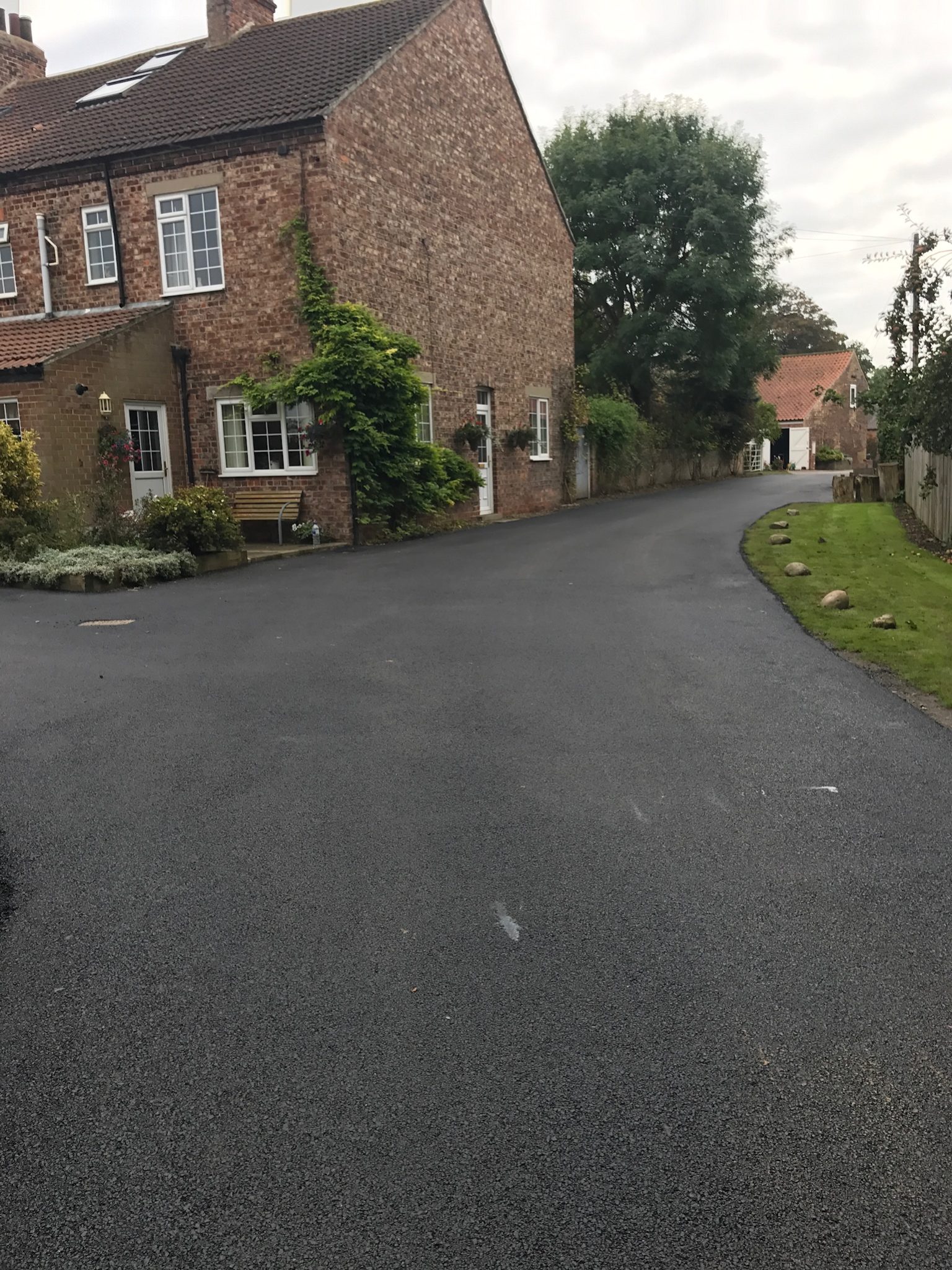


Choose Leeds | Manchester | Doncaster Surfacing Contractors for Efficient Surface Dressing
Here at GD Surfacing, we are known for our road surfacing solutions and efficient maintenance services. With a nationwide reach and a dedicated team who works 24 hours a day, 7 days a week, we will be your one stop shop when looking for surface dressing.
With a dedicated team of surface dressing professionals on standby around the clock, your project will be in the safest of hands with GD Surfacing contractors.